Pages

Showing posts with label food security. Show all posts

Friday, July 3, 2020

Reflections on a Changing World


Image credit: The Subversive Lens Facebook page. I just became aware of this writer.


Back in March, when the idea of what a pandemic meant hadn't yet sunk into my consciousness, I was afraid of what I didn't understand. It has been my nature to believe that things will work out well, to avoid disturbing news and at the same time to feel responsible for everything and fear anything I couldn't control. Needless to say, it was a difficult balancing act. 

When I began to grasp the pandemic's enormity, I fluctuated between feeling like self-isolating was really not much different than the way I had chosen to live and a total, all-encompasing fear. I had always lived simply and privately so self-isolating wasn't going to be hard. But it was. I was afraid of so many things that not knowing "the answer" on any subject about how to live through the pandemic was paralyzing. Now, more than three months into things, my anxiety has receded, replaced with a growing bit of resolve. I am grateful for my familiar way of life even with its new restrictions. 

This time of Mother Nature firmly kicking our global butts with a pandemic has caused the fragile systems that were holding us together as a country to fray alarmingly. Political systems, health systems, racial inequity, climate change, economic inequity, social support systems, educational systems and more, each in need of attention and overhaul. And the timetable of need so out of sync with the timetable of the possible. Yet, what else is there to do but to press on? Giving up is not an option although getting tired is guaranteed. 

I don't presume to have "answers." At the same time my North star remains a future that is fair, healthy and sustainable. Maybe I'm asking for too much, but maybe we - all of us - haven't expected enough of ourselves in the past. Maybe we've waited quietly for others to fix problems we saw. Or looked away when seeing was inconvenient or disturbing. For sure everyone can't do everything, but each of us can learn more about existing problems and engage more to better the situation. Some changes may come in bursts, others may be incremental. All contribute to moving along the path to that North star. Yes, it's going to be exhausting.


Wednesday, October 23, 2019

The Plight of the Honeybee


Photo credit: ThePollinators.net

"The Pollinators" is a documentary covering how honeybees are transported across the country as migrant workers. They are a crucial part of our food system, responsible for pollinating the majority of what we eat. They are dying off in huge numbers. They need our help, They are our responsibility.

This new movie will be shown in theaters across the country in November. Learn about the project here and get tickets here.  If you like to eat, don't miss it.


Monday, July 29, 2019

The Opportunity in Garbage


Food in a dumpster. Photo credit: Wikipedia's Food Waste page.

By reframing a situation, you can see it in a new light. You take the situation’s facts and place them in a different frame in which they fit equally well, thus changing the entire meaning. It works, and dear reader, there is an opportunity to do that with garbage.

The common statistic about food waste (going to either compost or landfill) in the United States is that it’s an appallingly huge amount. We waste nearly half of what is grown to eat; a full 40% according to the National Resources Defense Council. Yet we have neighbors who are food insecure. Rather than eating healthily, they fill their diets with what they can, too frequently “fast food” or highly processed food because its available and affordable. This is a mismatch that mindful restaurateurs know exists and try to address.

A group of such Denver restaurateurs and folks who ran a demonstration project to reduce food waste talked about this at the Slow FoodNations event in July. They shared how they were reframing their situations to flip the facts of waste and food insecurity for the better. Of course, they didn’t expect to change everything, everywhere. But they are doing what they can, viewing the process as permanent incremental change. This constant focus on improvement brought to mind the quotes of anthropologist Margaret Mead (“Never doubt that a small group of thoughtful, committed citizens can change the world; indeed, it's the only thing that ever has.”) and author Edward Everett Hale (“I am only one, but still I am one. I cannot do everything, but still I can do something. And because I cannot do everything, I will not refuse to do the something that I can do.”).

One chef talked about how he looked at what he’d been trained to do in culinary school and in kitchens where he learned his craft. He was told much perfectly good produce was as something that should be trashed as “too bitter” or “not useful.” For example, parts of lettuce, onions, carrots and more. Once in his own restaurant and he started paying for them, he thought it crazy that “$75 worth of lettuce made about $5 worth of salads” so he found ways to use many of those “scraps” in creative ways to make dishes for diners. And there was the discussion of rather than looking at any remaining scraps as garbage to be sent to the landfill with other trash, as useful when diverted from the trash and repurposed into compost to circle back into more food production. And one of the big changes in those restaurant kitchens was recycling. Although not food, it was still a crucial part of the “out of sight, out of mind” mentality of throwing things in the trash. In fact, during the demonstration project, there was a dramatic increase in the diverting recyclable items from the trash to reuse.

At the beginning of the demonstration project, participating restaurants recycled between 15-20% of their trash by weight. By the middle of the month-long project, it had increased to 70%. And after the project, the demonstration project team – brave souls – hand-sorted the remainder of the trash and pulled out even more, increasing the recycled amount to 85-90% of the total trash generated. By reframing an item of “trash” to be a useful, valuable item that just goes in a different bin, they made a significant change.   

Visual aids were used to show that in a well-functioning kitchen, true “landfill items” or truly unsalvageable stuff should be minimal. Just the gloves workers were required to wear prepping food, the blue tape that is used to label containers of food with contents and dates, the stickers from fruits and vegetables and the occasional container that cannot be recycled or reused. Other than that, everything a well-run restaurant uses can be recycled or composted. Since food is ordered based on demand and cooked to order so there should be minimal actual waste. Home cooks out there, what can you do to reduce your waste? And by the way, lest you think restaurants are where the most reframing can be done, presenters pointed out that home kitchens waste more than restaurants even though when asked, home cooks are confident they waste less than others.

Reducing food waste is primarily a function of being conscious of the impact of waste itself and the ripple effect of food insecurity. There are multiple right answers to the question of how to do this. Some tips and thoughts that were shared for restaurants and those involved in the waste/compost business:
·      Break down barriers to composting by working with properly sized (liftable) bins that can be handled safely.
·      Create space for compost or recycling bins by removing newly unnecessary trash bins.
·      Get over the “that’s unusable” mentality; get creative to use more of an item.
·      Stop gravitating toward doing “what’s convenient” to doing “what is the thoughtful and challenging” way to handle the situation sustainably.
·      Rethink what is rotting in a dumpster – no one should be food insecure in this country.
·      They were adamant that people not let anyone say donating restaurant food is illegal. There is a federal law enabling it. See the BillEmerson Good Samaritan Food Act of 1996. 
·      Use “ugly” food. To be nutritious and usable, bell peppers don’t need four lobes as the USDA requires to be top grade. Using “imperfect” but perfectly nutritious lower grades reduces trash.

How can home cooks work toward zero food waste?
·      Plan meals and shop weekly.
·      Buy just enough fresh food, cook it and eat it.
·      Freeze any leftovers and then eat them.
·      Support efforts to use “ugly” produce at home and elsewhere. 

Yes, it takes time to live this way. But that goes to the advice to move away from creating the waste that convenience leaves behind in the first place. To be more deliberate. More mindful. To change the way you live, right now. Help shape a sustainable future where everyone has enough to eat. It doesn’t really seem unreasonable, does it?

Sunday, May 19, 2019

A bias for action...

Ruminate's co-hosts for their Midwest launch. Image thanks to Ruminate's Facebook page.

There is a new, national not-for-profit organization uniting diverse change makers and food-focused professionals to convene, discuss, and ideate change in our food system. They are launching their Midwest efforts in my backyard. Ruminate considers itself "part think tank, part innovation lab" and is hosting three, hands-on working sessions for food system professionals in Grand Rapids, starting in June. For people ready to put talk into action. 

These two-hour events are intentionally designed, solutions-oriented sessions. Attendees will tackle intractable food system issues. In these Ripe for Discussion sessions everyday leaders can roll up their sleeves, dig in and build immediately-actionable change. The will cover: 
  • Building connections between producers and plates - June 23, 2019
  • The true cost of food and consumer knowledge - August 18, 2019
  • Who is responsible for balanced nutrition? - November 10, 2019
Talking is important for sure. But without action nothing changes.

Sunday, March 29, 2015

This doesn't make sense


Right on the heels of my post about permaculture, a long-view approach to a respectful relationship with the natural resources around us, and one that admittedly requires curiosity, patience, humility and real, hard work, I ran across a magazine article that stopped me. In the past I might have regarded the gardening tips in the article more benignly. But not now.

I won't mention the magazine because it doesn't matter. The information provided isn't materially different from what other magazines or websites on creating pleasant home and garden environments might offer. But the content of one tip in particular caused me to stop in my tracks. The tip, quoted verbatim below is:

"Step up to better soil. Raised beds can be filled with the very best topsoil so you don't have to spend years improving difficult ground. Traditional wood beds are fine, but composite decking boards and rusted steel are decorative and durable."

Yes! Better soil! No! Not that way! We can't continue to buy our way into growing sustainably. We need to do the  work of rebuilding our resources. The answer isn't for big companies to improve soil so they can scrape it into bags I buy. Its my responsibility to take care of the bit I have and create more and better soil. And I believe it's everyone's job. We've forgotten that, or become disconnected from it or call it what you will, but I believe we all decide to do the necessary work and forgo immediately gratifying gardens, we're just kidding ourselves.

The Land Institute has been working for decades to improve soil by researching and promoting polyculture (growing multiple crops/rotating them) rather than the monoculture that has overtaken US agriculture. They also promote perennial grains (like the grains that grew before modern farming) rather than the annual crops that the vast majority of farmers grow. This big-scale solution can be applied in container gardening as well. Paying attention to how we treat our soil and improve it rather than replacing it every year and starting fresh feels more responsible. More sustainable. More right. 

What to do besides supporting the Land Institute's work? Start composting. Have your yard soil tested and work to bring back its health naturally. Grow plants that help the soil and each other. Fertilize and deal with pests and plant diseases naturally. Help support pollinators. Yes, it's work. Worthy work. Satisfying work. Necessary work. And work that won't wait.
When people, land, and community are as one, all three members prosper; when they relate not as members but as competing interests, all three are exploited. By consulting Nature as the source and measure of that membership, The Land Institute seeks to develop an agriculture that will save soil from being lost or poisoned, while promoting a community life at once prosperous and enduring.” - See more at: http://www.landinstitute.org/about-us/vision-mission/#sthash.uUh0m7ZH.dpuf

Friday, March 27, 2015

Change that makes sense

One of the many posters in the Lexicon of Sustainability


An email landed in my inbox today from the folks at the Lexicon of Sustainability. I got acquainted with their work a couple of years ago and have been a fan ever since. They tell the story of sustainable food, growing, practices - you name it - so that people are using a common language when they talk. And hopefully, then, when they understand the issues they face. 

This poster on permaculture was explained as being a shift in thinking and living. A stepping back to see the really big picture. It said:

The word ‘permaculture’ comes from the melding of two words: ‘permanent culture’ and ‘permanent agriculture’,” points out Rhamis Kent. “It’s something that’s able to sustain itself by the very nature in which it’s constructed. As Bill Mollison says, ‘It’s the harmonious integration of landscape and people providing their food, energy, shelter, and other material and non-material needs in a sustainable way.’" Learn how permaculture is not just a sustainable agriculture method, but a lifestyle for many.

Makes sense to me.

Thursday, February 12, 2015

Local Investing Update

Local Stake logo

This organization was referenced in a blog post on January 10, 2015 .

Last month I started my local investing journey. Here's an update.

(Well, there was an update here until February 25. I was contacted by LocalStake and asked to take my post down. Apparently it was in violation of some type of something even though it didn't have any financial information but just very general business descriptions of the three firms I was interested in.

I'm still interested in them and sorry I can't share them further. To learn more about what LocalStake offers, you'll just need to go there and see for yourself.  Back to what was originally posted...)

So far I have three potential investments that I found on LocalStake. It would be great if more people needing funds were aware of them,  particularly those who fall into my area of interest, local food in Michigan and Indiana. But new ideas take time to spread. These firms are collecting interest from investors and with enough interest shown, will be available to actually invest in. Hopefully this brief update will help.

If these seem to be the types of businesses you would be interested in helping, take a moment to look at the LocalStake website (localstake.com). New businesses are added all the time. Or maybe you're a business looking for funds. Take a moment and see if this platform would be a way for you to raise the money you need from people who want you to succeed.

As has been said elsewhere, it's time to slow money down from flying around the world in electronic pulses being invested in who knows what. It's time to reclaim the connection between where we invest and where we are. It's time for a truly local stake in economic outcomes.

Sunday, September 7, 2014

So it has come to this

Source: A great webcomic site xkcd.com


I'm often at a loss for words. Not so much because of what is said to me (although that happens often enough), but because of what rattles through my brain. Such as:
  • Do people understand the many variables that go into food cost?  
  • What group benefits most from food companies' work - consumers, stockholders or employees? 
  • Are the discoveries and learning that led to the ability to manipulate genes automatically bad?
  • What would happen if food companies were required to follow the first principle of bioethics?"
  • Why do people who profess to support Slow Food principles become agitated when, dining in the Midwest, for example, their favorite French wine isn't on the menu? 
This is just an example of my tangled net of thoughts. Answers to questions like these seem to involve all kinds of qualifications and there are all those interconnections - consumers may be stockholders; stopping the import of French wine could impact jobs here and in France; manipulating genes is used in healthcare as well as food production; population is growing and there are threats to water, food and air as a result.

So, stumbling on a brief phrase like "So it has come to this" seems to accurately capture what is all too often my internal sigh, shoulder slump and head shake at the situation. Then its back to work. 

Sunday, January 19, 2014

Change

From my LinkedIn feed. I didn't catch where it came from or I'd credit it. 

Yesterday's pop up poster show about sustainable agriculture and the food system (continuing today, noon to 6pm at Journeyman Distillery in Three Oaks, MI) was an interesting experience and possibly an experiment. First, there was a lot of positive feedback from guests, from the manager of the venue and from the people who took time out of their days to be "resources"and provide deeper information to people who stopped to chat and learn. Second, the conversations that took place not only exchanged information, but a type of energy flowed as well.

Like all manner of conferences, workshops, seminars, networking events, etc., although the participants may truly value the information they exchanged, the new connections they made, or the affirmation they received of their own current efforts, the most valuable thing that gets taken away is the energy. Whether invigoration and motivation of the newly interested  or re-invigoration and re-motivation of those who may have long been involved in trying to make a change, the energy is the thing.

However energy is a asset that can deplete quickly if not replenished occasionally. Of course "wins" help boost energy, but the need is greater when faced with disappointment, failure and frustration. It's easy to get focused on how big the problem is, how intransigent, how deeply rooted. So rather than let energy seep away in the face of those things, consciously choose to re-energize. Events like this show can boost your energy and ready you for continued action. Or if you are already energized, it's a place where you may inspire someone on the fence...or on the other side of it entirely. Come on down.

Sunday, November 10, 2013

Confused Flora


I believe in climate change. I have for a long time. Although I don't have deep technical, scientific knowledge of the issue, I don't know that I need it to see an impact close to home. The potential for radically changing the growing season. In my lifetime.

For several seasons an arrow-head type plant in my front garden has grown far too late into the season after having died out and assumed that the brief cold snap was winter and the sure-to-be brief warm snap justified popping up out of the earth again.

But today, while walking, I saw what is in the picture above. Buds on a nearly dead rose bush, on November 10th. Buds sitting side by side with massive rose hips from dead roses and spotty leaves that appear just about to give up the ghost. Clearly the plant seems pretty confused. If roses are confused it's sad. If food crops are confused, and don't fully complete their growth cycles, then what?

Monday, November 4, 2013

Pop up poster show - Day 2


The first seasonal (Fall) show of Lexicon of Sustainability posters ended and quietly disappeared, leaving no physical trace of its presence. No trash. No damage. A simple end.

However it did leave some things behind. It left an energy behind to continue lots of conversations with new connections. And it left other people with next steps for projects in their backyards that promote local, sustainable food. And too, it sparked ideas for how people could work together to get more done collaboratively than they could alone, all without reinventing wheels. The two-day show was a start. It's up to everyone to keep the momentum going.

Watch the Art of Sustainability Facebook page for information on where you can see more posters at the Winter Pop Up Show.

Sunday, November 3, 2013

Pop up poster show - Day 1

One of the posters from the show November 2 -3, 2013 in Three Oaks. More information here.


Yesterday was the first day of the Lexicon of Sustainability pop up poster show in Three Oaks. The weather - sadly - didn't cooperate. It was mostly drizzly and got colder over the day. Overcast, dull and gray. Yet there were some hardy folks who came out to see the show and talk to those of us who were there. And in the venues, Edington Gallery and Pleasant House, chance patrons who knew nothing about the show saw it, engaged with it and perhaps one of the hosts. And so it starts.

Then a few of us stayed to continue the conversation around the Viking Table at Journeyman. 

Today, we start again. It's sunny and promises to be warmer for the show's second day. Fingers crossed for a bigger crowd and more conversations. The topic is important. Although the show had no specific outcome in mind other than focusing attention on the importance of our local food system and the meaning of sustainability, that itself is a big goal.

Today at 6pm the show disappears (although the issues it raises don't.) But mark your calendar for the next pop up show - January 18 and 19 at Journeyman - and more terms from the Lexicon of Sustainability. In the meantime, you can contribute to the conversation at the Art of Sustainability Facebook page (link is above under the image...)

Tuesday, October 22, 2013

Pop Up Poster Show

Words and images - address the meaning of sustainability in relation to our food system.

Early last summer I learned of a national project - The Lexicon of Sustainability - which was an effort to focus on local food systems and the meaning of terms that get thrown around referring to "sustainability" and all its nuances. After seeing images on their website, then a subset of them in person in Goshen, IN, I decided that I wanted to do a show here in Southwest Michigan.

Michigan is an agricultural powerhouse, yet we, like most areas, import most of the food we eat. That makes no sense to me. Oh I understand that we are at a point where we also probably can't support our population without some level of imports (imports meaning "originating outside the state") but I do believe we can do better at sustaining ourselves with what we have nearby. Our food system has over the years morphed into something that I want to change. I believe it's time to chip away at it in a mindful way. And I believe that it is everyone's responsibility. Everybody eats.

So when the opportunity presented itself to bring posters dealing with sustainability and the food system to my little part of the world, how could I not?

Information on the show is here. I hope you will stop by and join the conversation.


Saturday, March 16, 2013

Follow up thoughts


There has been a lot of discussion of the great disconnect that has separated people from the food they eat. Migration from the farm. The rise of processed foods, originally designed to help reduce the amount of time spent by women (mostly) cooking. The migration of women from home to workplace in large numbers and the shrinking (or completely disappearing) window of time to cook after work. There are all kinds of reasons why children (and some adults) don't know that carrots grow in the ground and that "seasons" are actually times of the year when different foods grow naturally in their geography. The disconnect problem is well identified. And I believe we need to care about it and work to reverse it.

I know people who raise virtually everything they eat. These people bake, and preserve, and freeze and are almost completely self sufficient. They are the people of the Barbara Kingsolver ilk, (Animal, Vegetable, Miracle) who have walked away from what others would say is convenience. They spend the majority of their time on all things food: tending their garden, dealing with harvests; planning for planting; reading up on news about how to naturally deal with pests of all kinds. This is hands on gardening by people who aren't caught up in the fast-paced way of life that seems all but inevitable. 

I also know people who are in love with the idea of gardening. Who believe in the concept of being close to their food and who sincerely care about the quality of what they eat. They plan, the plant, maybe even purchase a CSA. But they may poop out. Their garden does what gardens do and grows, but perhaps isn't tended, harvested or even visited because they are busy with other things. Their CSA arrives and if it doesn't contain exactly what they like, they scratch their head and question"what am I supposed to do with this!?" This is bounty wasted. Both in terms of the money to plan and plant on their part and their CSA farmer's, as well as the time that is often in short supply for us all. Sad for all the waste, not to mention the potential guilt/stress that "failing" to keep up with a garden and/or CSA can bring on.

I also know people who don't give a thought to where their food comes from. They assume they can get what they want, when they want it and it will be affordable. This has been the reality they have grown up with in this country. They may believe they are entitled to it and be seriously upset if they are inconvenienced when something they have a taste for isn't on the shelf when they reach for it. Yet more and more these people may find the cost of food increasing and its availability limited. Thanks to climate change and fossil fuel costs. According to the UN, the world is heading for a food crisis. Not the poor countries, the world.

Perhaps those people who live close to the land and rely on their own ingenuity to feed themselves will be ok when the food crisis hits. Perhaps those who are in love with gardening will find ways to rearrange their schedules and their preferences and become more engaged with their food. But in this country those two groups are not the majority of people, so what about them? What options do they have? 


Sunday, August 12, 2012

Farm to Everyone's Table


Yesterday I enjoyed a lovely meal in a lovely setting. It was fresh from the farm and prepared well. All local, including the wines. And the company was lovely as well, as was the setting. In many ways, it was the ideal meal - consciously chosen, locally produced and enjoyed with friends and good conversations.

Try as I might to eat that way every day, at least one of the ingredients is often missing. Some days I eat a quick meal standing at my kitchen sink so I can get back to work. Other times, I succumb to purchasing something that is out of season or from out of the area. Rarely do I purchase processed or fast food, but even there I sometimes fall down and do. Yet I can choose to do those things so I am choosing how I eat. And this consciousness is something that would not have been present 20 years ago for me.

On the other hand, there are so many people who cannot make the choices I do. Perhaps it is because they have a limited source of fresh, seasonal foods or don't have the financial ability to choose them. Perhaps it is because they are unaware of the impact of their choices on their health, the health of small farmers and the land on which their food is grown. Or perhaps they are so pressed for time that any thought of cooking is elbowed aside by convenience. For whatever reason, by choice or by default, these people reach for the fast, the processed and, as evidence continues to mount, the unhealthy.

As I've written and said so many times, eating isn't optional. However everyone should have the opportunity to choose the food they eat. Truly choose - not between Burger King and McDonald's, but between fast food and fresh food. Idealistic? You bet. A big change? Yep. Something that will continue to require education and support. Most likely. But something that has started and is gaining speed? I do believe so...

Wednesday, April 18, 2012

What ever happened to Spring?

I miss Spring. The Spring of my childhood. It was a time that let you shake off the cold of Winter slowly and ease into the warmth that promised to be Summer. It appeared slowly, greening bit by bit with occasional rains and sunny days coaxing sprouts. Now plants are yanked to attention with summery weather in March.

Today the lawn service was here cutting the grass for at least the second time and it's only mid-April in Michigan. The plants that were fooled into budding - grapes, fruit trees and more - were dealt a knock out punch when the weather suddenly turned cold and biting frosts snapped them. No Welches this year. Maybe some wine, but not as much. And it promises to be a difficult year for peaches apples and other fruits that were hit after growing far too much for the season.

I miss Spring. Now we seem to totter endlessly between Winter and Summer. I so hope we don't lose Fall too.

Tuesday, February 14, 2012

Continuing yesterday's conversation...


Ron's reply had a lot of "meat" to it and seemed to be quite a bit to "bite off" and address all at one sitting. (Ok, I'm done with the food references for now...)  I will take some time responding and will come back to it from time to time. To that end....

Ron noted his perception of the near calcification of the system since WWII. Bigger players, entrenched positions, lots of reliance on technologies that would seem to render real change unlikely as they could smack down annoyances. Yet, I'm not so sure. Lots of change is happening now because of technology and the speed with which a shared concern can be communicated and energy harnessed. Yet of course what looks like a quick action had lots of energy to go into it that wasn't visible too. Like the snow-bound pine branch that just sits and sits and sits with that mound of snow on it with nothing apparently happening, when the snow slides from the branches its likely from invisible melting that looks like a sudden change. 

Some examples:


  • Today's New York Times had an editorial about the strides made against childhood obesity by Michele Obama's "Let's Move" initiative and her planting of a garden on the White House lawn. It took decades for obesity to become a problem (those years between WWII and say the late 80s or early 90s). As recently as 2008 more than two thirds of American adults and one third of children were obese. What numbers! And while others were attempting to address this through the traditional channels - doctors warning patients, Jenny Craig touting diets, parents approaching schools to feed their children better and making "healthier" choices like shopping at farmers markets -  the conditions were shifting into place so that when the First Lady made obesity reduction her cause (and one I heartily support) it may have been that last little bit of sunlight that caused the avalanche. My cynical side says food companies saw the opportunity to make more money by getting in front of the parade through changing formulations to eliminate the "bad" ingredients. My optimistic side said that there were people in those food companies that genuinely believed that they needed to change, after all, they had children and grandchildren too and cared about their futures. It's not a black or white issue here. It's gray. In my ideal world, big food companies aren't necessarily always the problem, its how they operate and the choices they make that put them in the category of saint or sinner.
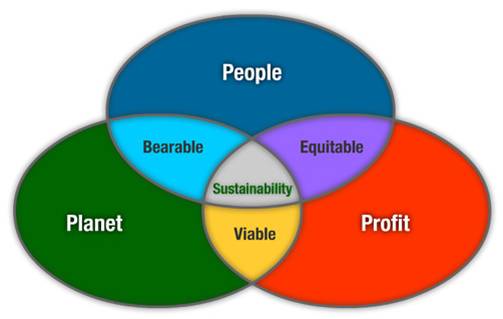
  • There is a bit of common wisdom that I believe has roots in science, which says that we see what we think about. Or said another way, we can't see what we don't think about. So it makes sense that someone like me sees lots of things going on in the world to change the relationship we have with food. But I know I have a lot of company from people concerned with the concept of sustainability which is bringing multiple disciplines together around issues that touch on food and more. This concept has been around for a long time, but again, people are able to more easily connect now and working collaboratively is more expected, since it's not possible to deal with complex problems in isolation. (Not sure it ever really was...)  Nearby the Center for a Sustainable Future (at my Alma Mater and my professor's former home Indiana University, South Bend Campus) is an example of this. Four years old, the center is a regional, cross-state-line effort to "... engage the campus and greater Michiana communities in creating a future focused on the "triple bottom line." Choices that are good for people and the planet, as well as profits, and that take into account ecological and social performance are promoted and encouraged by the Center." Everything is connected - food and manufacturing processes and HVAC and products used to clean the floors and health and more. Once things are viewed this way it makes it difficult to consider any one thing in isolation. Sustainability is the kind of framing mechanism that is giving this change legs. And sustainability too has economic benefits.
Sudden change takes a while. And looking at things as interconnected may help to move away from the win/lose, black/white mentality that has crept into so much of society. I'm hopeful that the conditions are such that rather than totally swallowing the efforts to change the current food system (some of which is inevitable) new recipes can be found that are beneficial to all. Call me Pollyanna. Others have. But things are happening. The key is to keep them moving.


Image from the website of The Center for a Sustainable Future, Indiana University, South Bend
 

Monday, February 13, 2012

What happens when....

In Skyping with a former professor of mine turned friend and mentor we talked about the things I'm interested in and working on to make changes to the food system. He didn't ask, but the changes I'd like to see are not most likely very different from those of many other people:

  1. I'd like to know where my food comes from and how it was grown/produced.
  2. I'd like to have real choices in all types of food, not be limited to eating GMOs, foods that have additives etc. 
  3. I'd like to be able to buy most things without having them travel hundreds and hundreds and hundreds of miles to get to me. 
  4. I'd like to be able to buy fresh as much of the year as reasonable and have regional food processing done (like the time when every town or area had a brewery, which is happening again....) so that I could support local growers year round. 
  5. I'd like to have more of the price I pay for food go to the people who raised/produced it and less to the intermediaries, packaging companies, shippers and marketers.
  6. I'd like to see healthy, fresh, sustainably raised/produced food available to everyone at a fair price. 
 Tall order, yes. And he raised some questions. Specifically:

  1. What happens when the activism to get these things may hit declining returns relative to the effort to get them done?
  2. What might be the countervailing activities that don't get put into action until the threat to the existing system takes a harder form?
  3. And, what may be some unintended consequences of successfully changing the food system?
Worth some thought and some conversation....


Wednesday, February 8, 2012

The Future's in Farming

Not so very long ago the numbers of farms and farmers was declining rapidly and the farmer's plight was brought to the attention of the public by Willie Nelson and Farm Aid. While all is not completely rosy in the world of smaller scale farming, it is having a renaissance. And, in my opinion, it isn't a moment too soon. As I've said many times, eating isn't optional. However I want to be able to choose what I eat, how its grown, how far it traveled etc. And without people who are willing to take the risks to grow food near me, that isn't always possible to do. But the more people who choose to make their livelihood in agriculture and food production, the more choices I will have, and the more chances I will have to be able to really know about what I'm eating with the things that I don't raise or grow myself.

Realistically everyone can't farm, but I think everyone can raise some of their own food. And if we're lucky, everyone will be able to know at least one farmer who supplies something they eat.


Tuesday, January 24, 2012

How can we...

There is much work that needs to be done to create a food system that is sustainable, healthy, profitable and fair. And there are those who say that it can't be done, that healthy food is inevitably going to be out of the reach of the less well off. That it isn't possible to change a culture that is addicted to convenience (even at the expense of health) and disconnected from the seasonal patterns that defined an earlier time. But I refuse to believe that we don't have the grit required to tackle this.

Truth lies in the the statement: "the answers you get depend on the questions you ask." There are people out there who are making attempts to change the system, bit by bit, brick by brick. Asking "how can we create..." is so much more helpful than trying to "fix" something broken. Fixing something without being clear on whether it will work toward a desired future or deliver more of the same is wasting time, resources and spirit.

"Fair Food: growing a healthy, sustainable food system for all" by Oran B. Herserman, PhD provides some jumping off points for people willing to take the risk of going against the grain of the current food system. But if you are like me, it won't feel like a risk, but rather just a logical step toward a better future.

You can learn more about this at the book's website. Oh, and I don't make anything if you buy the book there or anywhere else.