Pages

Showing posts with label abundance. Show all posts

Wednesday, October 23, 2019

The Plight of the Honeybee


Photo credit: ThePollinators.net

"The Pollinators" is a documentary covering how honeybees are transported across the country as migrant workers. They are a crucial part of our food system, responsible for pollinating the majority of what we eat. They are dying off in huge numbers. They need our help, They are our responsibility.

This new movie will be shown in theaters across the country in November. Learn about the project here and get tickets here.  If you like to eat, don't miss it.


Monday, July 29, 2019

The Opportunity in Garbage


Food in a dumpster. Photo credit: Wikipedia's Food Waste page.

By reframing a situation, you can see it in a new light. You take the situation’s facts and place them in a different frame in which they fit equally well, thus changing the entire meaning. It works, and dear reader, there is an opportunity to do that with garbage.

The common statistic about food waste (going to either compost or landfill) in the United States is that it’s an appallingly huge amount. We waste nearly half of what is grown to eat; a full 40% according to the National Resources Defense Council. Yet we have neighbors who are food insecure. Rather than eating healthily, they fill their diets with what they can, too frequently “fast food” or highly processed food because its available and affordable. This is a mismatch that mindful restaurateurs know exists and try to address.

A group of such Denver restaurateurs and folks who ran a demonstration project to reduce food waste talked about this at the Slow FoodNations event in July. They shared how they were reframing their situations to flip the facts of waste and food insecurity for the better. Of course, they didn’t expect to change everything, everywhere. But they are doing what they can, viewing the process as permanent incremental change. This constant focus on improvement brought to mind the quotes of anthropologist Margaret Mead (“Never doubt that a small group of thoughtful, committed citizens can change the world; indeed, it's the only thing that ever has.”) and author Edward Everett Hale (“I am only one, but still I am one. I cannot do everything, but still I can do something. And because I cannot do everything, I will not refuse to do the something that I can do.”).

One chef talked about how he looked at what he’d been trained to do in culinary school and in kitchens where he learned his craft. He was told much perfectly good produce was as something that should be trashed as “too bitter” or “not useful.” For example, parts of lettuce, onions, carrots and more. Once in his own restaurant and he started paying for them, he thought it crazy that “$75 worth of lettuce made about $5 worth of salads” so he found ways to use many of those “scraps” in creative ways to make dishes for diners. And there was the discussion of rather than looking at any remaining scraps as garbage to be sent to the landfill with other trash, as useful when diverted from the trash and repurposed into compost to circle back into more food production. And one of the big changes in those restaurant kitchens was recycling. Although not food, it was still a crucial part of the “out of sight, out of mind” mentality of throwing things in the trash. In fact, during the demonstration project, there was a dramatic increase in the diverting recyclable items from the trash to reuse.

At the beginning of the demonstration project, participating restaurants recycled between 15-20% of their trash by weight. By the middle of the month-long project, it had increased to 70%. And after the project, the demonstration project team – brave souls – hand-sorted the remainder of the trash and pulled out even more, increasing the recycled amount to 85-90% of the total trash generated. By reframing an item of “trash” to be a useful, valuable item that just goes in a different bin, they made a significant change.   

Visual aids were used to show that in a well-functioning kitchen, true “landfill items” or truly unsalvageable stuff should be minimal. Just the gloves workers were required to wear prepping food, the blue tape that is used to label containers of food with contents and dates, the stickers from fruits and vegetables and the occasional container that cannot be recycled or reused. Other than that, everything a well-run restaurant uses can be recycled or composted. Since food is ordered based on demand and cooked to order so there should be minimal actual waste. Home cooks out there, what can you do to reduce your waste? And by the way, lest you think restaurants are where the most reframing can be done, presenters pointed out that home kitchens waste more than restaurants even though when asked, home cooks are confident they waste less than others.

Reducing food waste is primarily a function of being conscious of the impact of waste itself and the ripple effect of food insecurity. There are multiple right answers to the question of how to do this. Some tips and thoughts that were shared for restaurants and those involved in the waste/compost business:
·      Break down barriers to composting by working with properly sized (liftable) bins that can be handled safely.
·      Create space for compost or recycling bins by removing newly unnecessary trash bins.
·      Get over the “that’s unusable” mentality; get creative to use more of an item.
·      Stop gravitating toward doing “what’s convenient” to doing “what is the thoughtful and challenging” way to handle the situation sustainably.
·      Rethink what is rotting in a dumpster – no one should be food insecure in this country.
·      They were adamant that people not let anyone say donating restaurant food is illegal. There is a federal law enabling it. See the BillEmerson Good Samaritan Food Act of 1996. 
·      Use “ugly” food. To be nutritious and usable, bell peppers don’t need four lobes as the USDA requires to be top grade. Using “imperfect” but perfectly nutritious lower grades reduces trash.

How can home cooks work toward zero food waste?
·      Plan meals and shop weekly.
·      Buy just enough fresh food, cook it and eat it.
·      Freeze any leftovers and then eat them.
·      Support efforts to use “ugly” produce at home and elsewhere. 

Yes, it takes time to live this way. But that goes to the advice to move away from creating the waste that convenience leaves behind in the first place. To be more deliberate. More mindful. To change the way you live, right now. Help shape a sustainable future where everyone has enough to eat. It doesn’t really seem unreasonable, does it?

Sunday, May 19, 2019

A bias for action...

Ruminate's co-hosts for their Midwest launch. Image thanks to Ruminate's Facebook page.

There is a new, national not-for-profit organization uniting diverse change makers and food-focused professionals to convene, discuss, and ideate change in our food system. They are launching their Midwest efforts in my backyard. Ruminate considers itself "part think tank, part innovation lab" and is hosting three, hands-on working sessions for food system professionals in Grand Rapids, starting in June. For people ready to put talk into action. 

These two-hour events are intentionally designed, solutions-oriented sessions. Attendees will tackle intractable food system issues. In these Ripe for Discussion sessions everyday leaders can roll up their sleeves, dig in and build immediately-actionable change. The will cover: 
  • Building connections between producers and plates - June 23, 2019
  • The true cost of food and consumer knowledge - August 18, 2019
  • Who is responsible for balanced nutrition? - November 10, 2019
Talking is important for sure. But without action nothing changes.

Saturday, November 24, 2018

Local Resiliance


Thanks to Alice Waters' blog for this image. She is the mother of the local food movement in this country.

Readers of this blog are likely all aware of the goal of local, ethical sourcing. Eating closer to home and seeking out the farmers markets, farms and restaurants that share that philosophy. But Naomi Klein talks about why a decentralized, multi-provider food system is a good idea. In her new book, The Battle for Paradise, she takes on the idea of disaster capitalism and how things like monocropping and concentration of power can result in negative outcomes. 

During the years when not only Michiana but the entire country underwent a food revolution, food sources moved from small local and regional growers and producers to more and more regional, then national and international growers and producers. Food became an industry. Rather than being able to rely on local products, consumers, institutions like schools and hospitals and restaurateurs began to be channeled into national brands, low cost producers and food items created for their simplicity and ease in shipping rather than their taste and nutrition.

Now as more and more individuals and businesses seek out local items, possibly even those that are foraged, or choose to make their own breads, sausages, beers, soups and more, they face a different challenge. Amid plenty, there are local food deserts.

Unlike the kind of food deserts that occur when there is no access to healthy food, these food deserts result when there aren’t enough local producers to fill the desires of eaters and restaurateurs for local products. Goals of “eating local” can only be satisfied so far until supply catches up with demand. And can only genuinely be satisfied when diners’ expect and enjoy changing menus, reflecting precisely what’s available rather than what one “has a taste for.” Eating with the seasons means that change is inevitable.

Such eaters and local-focused institutions are reclaiming the specialness, freshness and taste of local. They are working as quickly and as much as the situation permits with farmers, producers, foragers and suppliers to eradicate their local food desert. The goal: rebuilding a food system rooted in a specific place.

-->

Sunday, June 3, 2018


Prying one's fingers off the old is my first step. Sometimes the saying that "the devil you know is better than the devil you don't" plays repeatedly in one's mind, resulting in stuckness, an inability to move. Its actually a misconception that all potential devils are equal. Of course, some absolutely are scary and to be avoided. Taking an action that has the likely result of harming health certainly is.  Or acting vindictively, selfishly or ruthlessly is too. But when trying to take a step that is simply uncertain, holding potential that isn't fully formed or guaranteed, I've always found it's a bigger risk to do nothing.

A long-ago poem below is newly relevant: it's not possible to hold onto the old while trying to shape the new.

Wanting, Waiting, Wondering

Wanting, waiting, wondering.
Hanging on as the trapeze that is my life
Swings back and forth in an apparently unchanging arc.
On the other side opportunity, new perspectives, excitement beckon.

Wanting, waiting, wondering.
What does it take after years of back and forth
To risk, exert myself, reach out                                                          
For that bar swinging toward me?

Wanting, waiting, wondering.
Deep breath, concentration, timing.
Now in the air, unprotected, reaching for the future -
Timelessness and space

 A firm grasp and I'm there.

 Copyright Paula T. Bartholome, 1998


Saturday, June 2, 2018


Photo credit: lifehacker.com.au

Time Off for Thinking

It's been quite a long time since I've posted anything. I've been stuck. Trying to figure out which way to turn and what's next in this life. Having rebooted and redefined myself multiple times, each time thinking it's the last, it's rather surprising to find that I'm about to do it again. But that's what's on the horizon. After fruitlessly trying to hide from Life V. 11.0 - yes, when I sat down and figured it out it will be the eleventh time I've picked up and started over in some way - I am now, as they say, "leaning in."

While I don't know what this version is going to be just yet, I can only say that it feels good to claim it. And I'm looking forward to discovering where this new journey leads. More later.

Sunday, March 29, 2015

This doesn't make sense


Right on the heels of my post about permaculture, a long-view approach to a respectful relationship with the natural resources around us, and one that admittedly requires curiosity, patience, humility and real, hard work, I ran across a magazine article that stopped me. In the past I might have regarded the gardening tips in the article more benignly. But not now.

I won't mention the magazine because it doesn't matter. The information provided isn't materially different from what other magazines or websites on creating pleasant home and garden environments might offer. But the content of one tip in particular caused me to stop in my tracks. The tip, quoted verbatim below is:

"Step up to better soil. Raised beds can be filled with the very best topsoil so you don't have to spend years improving difficult ground. Traditional wood beds are fine, but composite decking boards and rusted steel are decorative and durable."

Yes! Better soil! No! Not that way! We can't continue to buy our way into growing sustainably. We need to do the  work of rebuilding our resources. The answer isn't for big companies to improve soil so they can scrape it into bags I buy. Its my responsibility to take care of the bit I have and create more and better soil. And I believe it's everyone's job. We've forgotten that, or become disconnected from it or call it what you will, but I believe we all decide to do the necessary work and forgo immediately gratifying gardens, we're just kidding ourselves.

The Land Institute has been working for decades to improve soil by researching and promoting polyculture (growing multiple crops/rotating them) rather than the monoculture that has overtaken US agriculture. They also promote perennial grains (like the grains that grew before modern farming) rather than the annual crops that the vast majority of farmers grow. This big-scale solution can be applied in container gardening as well. Paying attention to how we treat our soil and improve it rather than replacing it every year and starting fresh feels more responsible. More sustainable. More right. 

What to do besides supporting the Land Institute's work? Start composting. Have your yard soil tested and work to bring back its health naturally. Grow plants that help the soil and each other. Fertilize and deal with pests and plant diseases naturally. Help support pollinators. Yes, it's work. Worthy work. Satisfying work. Necessary work. And work that won't wait.
When people, land, and community are as one, all three members prosper; when they relate not as members but as competing interests, all three are exploited. By consulting Nature as the source and measure of that membership, The Land Institute seeks to develop an agriculture that will save soil from being lost or poisoned, while promoting a community life at once prosperous and enduring.” - See more at: http://www.landinstitute.org/about-us/vision-mission/#sthash.uUh0m7ZH.dpuf

Friday, February 27, 2015

Living the Dream


This oil painting isn't really Ron's farm. I just liked it. You can find it here.

-->

“Hydrant's frozen”
“It won’t start”
Buck barn isolated,
Drifting snow ate our truck.

2 am, checking for newborns,
so cold eyes burn, fingers tingle
the snow crunches, but ghostly quiet.
all is well, living the dream.


Thanks and a tip of my warm, fuzzy hat to Ron Klein of Windshadow Farm & Dairy in Bangor, MI for this.  He posted it to a list I'm on and graciously gave me permission to reprint it.

Wednesday, February 11, 2015

More Than Enough


Recently I came upon a quote about gratitude. It knocked me down and picked me up. It was:

Gratitude turns what we have into enough. 

Why, yes it does. Maybe that's why those meals that are scraped together from whatever is around - some veggies and a little bulgar left to marinate and then sauteed - are some of the ones I enjoy the most. Unplanned tastes mingle together and may never be created exactly the same way again. Nothing is written down. It is just done and enjoyed. Ah....

I don't need "more." I need "better." With better I can make do with less because I truly enjoy whatever is better - the vegetables, the wine, the balsamic vinegar in the marinade. More is simply more. Better is better. And better trumps more every time in my book. 

I am grateful that I am able to live a simple life. That I have work that is meaningful to me. Even today's grey sky that keeps me inside and focused. Some things I'm grateful for I have worked hard to bring about; some happened with no input from me. But gratefulness is my conscious choice. 

Enough is enough. Not too much, not too little. Enough.


Sunday, November 2, 2014

Reconnecting with Thanks

This item (15510) is available at chinaberry.com.  I get nothing if you decide to purchase it.  


Thanksgiving is barreling toward us. I say "barreling" because it feels nothing like the holiday of my childhood. Then it was a gateway to the season of celebration that was December. It was anticipated and planned for of course, but there was no stress about what would be served or how dinner would be done. Or in my house, it seemed that there was also no question about who would be there and how the experience would unfold.

The food was traditional and anticipated because it was seasonal. It was the first time that we would enjoy the persimmon pudding that would be present through year end, then disappear again until next year's crop of persimmons. It was also about that time that we would be the beneficiaries of the once-a-year case of Coke and Bubble Up that would be given to my father by some vendor his business used. It was consumed sparingly but such a treat! And of course there would be turkey, dressing, potatoes, beans and homemade wine.

Besides my parents and me, I recall the traditional guests as my brother and his wife and two children, my maternal grandparents and perhaps my Uncle John and Aunt Juanita. It's a bit fuzzy about who moved in and out the picture over the years. The table would only accommodate eight. But the core was always there - my parents and me - even as others grew up and moved away, had other commitments or died.

My mother did the meal from beginning to end. I don't recall anyone bringing dishes although they might have. She worked very, very hard and long hours getting things ready in advance and cooking the entire day of Thanksgiving dinner. As she got older it must have tired her out more and more because somewhere along the line I think she must have stopped. Perhaps when the people were no longer there to congregate, perhaps when she just decided it was too much. Perhaps when she decided it was time for the next generation to step up and take on the tradition. Whatever it was, it was long ago because she died in 1988 and had stopped having Thanksgiving at least five years before that. So the strong memories I have and feel so connected to are from more than 30 years ago.

There was a great deal to be thankful for back then. But I don't think we spent much time thinking about it. Maybe it means so much to me now because no one who was there then is here any longer. No one but me. Maybe its meaningful because what I took for granted as permanent is no more.

Today my Thanksgivings are a different kind of celebration. In their way, they honor friends, good food, others' traditions. These Thanksgivings and their traditions are no less worthy than mine. Yet, I still long for mine. 


NOTE: The picture above is a simple way to introduce mindful thankfulness into Thanksgiving, or actually any meal. IT is a simple wooden bowl hewn from American hardwood. It holds carved wood acorns and maple leaves.  Using it is simple. According to the catalogue, just pass the bowl around the Thanksgiving table so each person can take on of the pieces. As everyone holds their piece, they can express their gratitude silently or out loud. When everyone is finished, pass the bowl around again to collect the pieces. The full blow now a meaningful symbol of the thanks offered by the entire group can be placed on the table as a reminder.


Saturday, August 2, 2014

Summer Saturday Mornings

Selfishly I don't want anyone to know where this road is. I want to keep it all to myself on Saturday mornings.


This summer I split a CSA with a neighbor and chose to pick it up from the farm rather than from an in-town location where it could have been dropped. Yes, the price was less because I did the pick up. But that's not why I wanted to do it.

Where I grew up it wasn't really country despite the fact that there was a dairy farm next door and cornfields across the back fence. But it was a place that was open and green and a bit wild and country-like. And for good or ill, it is in me, drawing me to like places. Where I pick up my CSA is such a place.

It is a real farm, farmed by a young couple with two children, lots of energy and even more passion and dreams. They are the future, holding my past in the palms of their hands.  They value many of the same things I was taught to value - hard work, honesty, simplicity and family. And they live out of the way, about 30 minutes from the little town where I now live.

To get there requires a drive in the country and if navigated properly, it can feel like the true middle of nowhere. Wide open spaces, lots of green, no houses and my personal favorite, dirt roads. Not dirt lanes to houses, but dirt roads that must be taken slowly to avoid or stay in the ruts that the rain and wheels create. Dirt roads that spew up dust behind the car when its dry, obliterating everything that has been passed. Dirt roads that take away that last bit of stress that had started oozing away the minute I left "civilization."

Saving money is great, but the real value of picking up my CSA is the opportunity to be in a place where I feel so much at home.


Saturday, June 28, 2014

Feeding a Memory


I spent this morning the way I imagine my grandmother and my mother spent their days.
They cooked.
Every day.
From scratch.

But today I really tried to think about my grandmother - a woman I barely remember who lived with us for a few years until her death - and how her days were spent, caring for a house, and cooking for a husband and seven children. I was thinking about a particular time in her life, the summer of 1937. The first summer after my grandfather had died, but while several of her children were still at home. 

I started by going to my deck garden (she would have gone to her garden behind the house on 10th Street in the southwest Indiana town) and gathering a few things for today - kale, greens, chives, tarragon - then watering in advance of a hot day. Her garden was likely fenced against animal intruders. Mine is relatively untouched even in an area where heron are seen at the pond a few yards away, deer wander across nearby streets and packs of coyotes have been spotted in my little Michigan town.

After putting away my harvest (I'm am confident my grandmother had an icebox since my grandfather had been stationmaster for the Pennsylvania Railroad and could afford modern conveniences), I decided to bake. Logically she would have baked early in the day, before the house heated up. Baking was hot work without air conditioning, mixers, food processors and likely with poorly insulated ovens. Late in the day a kitchen might be hotter than it was outside, depending on where it was located in the house and if there were trees shading it. But cooking needed to be done because the other option was eating at a restaurant. More importantly, I think, in that time and in my mother's as well, cooking was expected.

I used a recipe on a worn 3x5 inch recipe card written in my mother's handwriting, making "Apple Sauce Cake De Luxe" clearly noted as "Mrs. Bartholome's". Although my mother was "Mrs. Bartholome" too, there was no mistaking that this was my grandmother's recipe.

The cake called for unsweetened applesauce which she would have very likely made previously. My mother made applesauce from Transparent apples, one of many varieties in our backyard. Fortunately I've found a source for those same apples and pulled a jar of last year's applesauce from the pantry. 

The recipe didn't mention icing so I left the cake un-iced. I wanted the first taste to spur a memory of my grandmother or at least of having had this handed down recipe cake as a child. After it cooled, I cut a square and prepared to be transported. Nothing. The cake was good, really good. A neighbor on whose porch I'd left some while it cooled wrote an email to rave about it. I would make it again and enjoy it. But I can't use it to call up the memory I wanted. Yet, I still feel connected and that I know something about my Grandmother because of making that cake. I'd had the recipe forever but never made it. Now I have the memory of making it in honor of her and of my mother who preserved it.

In addition to applesauce, it has cocoa, nutmeg, cinnamon and more spices. I didn't follow the recipe exactly since they don't make Spry anymore, but I think my grandmother would have liked mine as much as I liked the experience of making it.

Here is the recipe just as it was handed down:

1/2 c. Spry
3/4 tsp. salt
1/2 tsp. cinnamon
1/2 tsp. cloves
1/2 tsp. nutmeg
1/2 tsp. allspice
2 Tbsp. cocoa
1 1/2 c. sugar
2 eggs unbeaten
1 1/2 tsp. soda
2 c. sifted flour
3/4 c. dates, chopped
3/4 c. raisins, chopped
1 1/2 c unsweetened applesauce
3/4 c. nuts, chopped

Blend Spry, spices and cocoa. Add sugar gradually and cream well. Add eggs singley, beating after each. Add soda to flour and sift three times. Sprinkle 2 Tbsp. flour over fruits. Add remaining flour to creamed mixture alternately with applesauce, mixing after each addition until smooth. Add nuts and floured fruits to batter and blend. Bake in 10x10" greased pan. 55-60 minutes at 350 degrees.

Thursday, November 28, 2013

Giving Thanks


This is exactly what I needed. I stumbled on this on the Internet as I tried to divert my mind from dwelling on sad things and be proactive. It's not that I want to be sad. It's just that sometimes it seems to be my default setting. I know that I have much to be thankful for. Yet I get lost in the past or the future rather than being - as they say - "here, now."

The sadness that had me in its grip was a jumble of things. Missing people who are no longer here, missing opportunities no longer available, questioning the twinges and whatnot that have inevitably settled in as time passes and my body ages. And more things dealing with the past. And to give the future its due, worry about what is in store as those twinges and whatnot may develop into full blown diagnosable things, anticipated sorrow at not being able to do things and progressive slowing, plus the relentless loss of my peers and friends. Yet today, I am in neither of those places so need to shake them off. 

What I'm feeling is the result of things I had no control over (like my genetic make up and where I grew up) plus the result of choices I've made (such as the jobs I've taken and the relationships I've avoided.) My sadness or dissatisfaction with those things is - at the core - sadness or dissatisfaction with myself.

My mother was a very wise women. One who lived with at least occasional depression I'm pretty sure, yet of a generation that didn't become obsessed with "feeling" it or allow it to debilitate her. She was of the school that if she was feeling down, she needed to get busy. I'm not sure  it mattered with what, but just busy - cleaning, cooking, sewing, doing laundry, visiting with her parents, writing a letter to an elderly aunt. All things that got her out of herself and were done with at least a partial if not full focus on others. At the time I saw her life as drudgery, lacking excitement and fulfillment. It wasn't flashy and she wasn't famous or doing "important" things. Now I know that she was doing the most important thing of all - doing what she could that was needed by others. Appreciated by them - too often silently. And she was living a good life. When I remember that I can snap to the present and leave the past and the future alone, at least for a while.  This Thanksgiving, my thanks are for her.


Thursday, November 21, 2013

Further thoughts on my "year of yes"...

FOUND IN DRAFT FOLDER (it was written 8/31/13) - MY BAD!


Yesterday was my birthday. A few years back in the weeks leading up to that day I was pretty miserable, and now I understand why. I thought I understood then, but I think I was wrong.

Then I was facing one of those momentous birthdays. A "big 0" birthday. The ones that clearly - particularly as the number before the "0" gets larger - mark progression if not progress. Progression is inevitable and over time it became quite obvious that the progress didn't match my plans. And my ability to make up for lost time was slipping away. Such a view is clearly a "half full" one. Possibly even a lot less than half full.... From such a perch it was easy to fall into a loop of negative thoughts that even further limited whatever was possible. My attitude was quite negative and was leading me into a "year of no." I can't. It's too late. It's not worth...you get the idea. I put the losses of aging in the front seat with me on my remaining ride.

Now, after having gone through more than half of my "year of yes" things appear very different. Consciously choosing to look at the positive aspects whatever happens, while seemingly Pollyanna-ish, has allowed me to do more. Rather than being mired in inaction and all the "can'ts", I've embraced opportunities and invitations to act that I would never have expected. Working with people on planning events, starting organizations and more. These were things I didn't see in my future but were grabbed the moment they appeared. Having a plan to the future is good. Being blindered to any other than a single route to get to that future was a recipe for sadness. Opportunities and invitations rather than losses are now in that front seat with me. The trip is much more pleasant.

Saying yes to things has proved to be a wonderful antidote to the reality of time passing. Let it pass. Who knows what it will bring?


Donations, De-Stuffing and Guarantees


Old lights  - nice and bright
New lights - a bit subdued even though bigger

As part of year-end planning, I had a conversation with my financial adviser and my tax adviser. Seeing that written looks pretentious. I don't have tons of money. However I decided long ago that I wouldn't have any if left to my own devices. I wasn't a spendthrift and saved regularly, but wasn't interested in investing the way others in my family were, and banks were not the places where funds left on deposit would grow significantly. And since I wasn't the kind of risk taker who would tackle starting a business, there seemed to be wisdom in having someone advise me on how to manage my money. It was a good decision. But back to the conversation...

Part of the conversation was trying to guestimate what I will owe in taxes and if there is anything that can be done between now and the end of the year - let me be quick to say, legally - to minimize those taxes. As a result of that conversation I began a serious round of collecting items to donate. I do this other times during the year, and truthfully have not been as ruthless in weeding things out as I should be. I have (I think we all have) too much stuff. So on the hunt I went.

While doing this I happened to be checking email and saw something from The Triple Pundit (I think) about swapping out incandescent Christmas lights for LED lights. There was a monetary incentive to do this and I knew they would use less energy and be cooler on the tree, thus less risky as the tree dried out over the holidays. While clearing out my old lights didn't fall into the category of a donation, it would still accomplish the second goal of de-stuffing my home.

The Christmas lights I've been using on my tree are very dear to me. They were used when I was growing up and seeing them in the box and on the tree reminds me of my father, my mother, my childhood, my home, well, you get the idea. They are a part of me. I didn't want to turn loose of them. Yet, intellectually, I knew it was the right thing to do. Or was it?

That question arose after I made the trip to the store to do the swap. I'd screwed up the gumption to trade five strands of my lights for five strands of LED lights. In perusing the too-many choices (don't get me started, that's another issue) I saw that lights carried a range of guarantees for how long they should be expected to last. The guarantees ranged from one year to seven years. Huh!? The lights I was giving up had lasted more than 50 years and were still going strong. This screamed planned obsolesence!

I suppose the argument is that technology is changing so fast that it doesn't make sense to make things that last a long time. But at what cost? What is lost in this mentality is the pride of workmanship that made it possible to hand down Great Grandma's sewing machine or Uncle Harry's roll top desk. They were made to work. To look good. And to outlast their owners. Now, not so much. Maybe today's humans feel threatened by things that outlast them. I don't know. But I do know that I still value things that will outlast me. I don't need the newest and shiniest things to be happy or feel successful. And I think Christmas lights that are still working after 50+ years are to be celebrated.

So did I swap out the lights? Some, not all. I'm not a total Luddite. I know the benefits of LED lights are real. At the same time I know the value of long-lasting products, like fond memories, are real too. Both need to be kept and handed down.

Tuesday, October 22, 2013

Pop Up Poster Show

Words and images - address the meaning of sustainability in relation to our food system.

Early last summer I learned of a national project - The Lexicon of Sustainability - which was an effort to focus on local food systems and the meaning of terms that get thrown around referring to "sustainability" and all its nuances. After seeing images on their website, then a subset of them in person in Goshen, IN, I decided that I wanted to do a show here in Southwest Michigan.

Michigan is an agricultural powerhouse, yet we, like most areas, import most of the food we eat. That makes no sense to me. Oh I understand that we are at a point where we also probably can't support our population without some level of imports (imports meaning "originating outside the state") but I do believe we can do better at sustaining ourselves with what we have nearby. Our food system has over the years morphed into something that I want to change. I believe it's time to chip away at it in a mindful way. And I believe that it is everyone's responsibility. Everybody eats.

So when the opportunity presented itself to bring posters dealing with sustainability and the food system to my little part of the world, how could I not?

Information on the show is here. I hope you will stop by and join the conversation.


Thursday, December 27, 2012

A year of "yes"

A conscious choice....

It's not something that I can take credit for thinking up. And I'm not sure where I even ran across it as an idea. But it feels right and I'm ready!

Ta-da!

Next, year - 2013 - is going to be my year of "yes." What is that, you ask? It is saying yes, when I would have said no. Taking chances that I would have avoided. Experiencing things that I've been so sure I don't like, don't want to do. It is the opposite of the life of "no" that has been part of me for so long. The "can't" the "shouldn't" the "won't work" and the "I don't." All the sureness that I had about what just wasn't who I was is gone. Pitched out the window and replaced with an openness to possibilities (even those ones that seem questionable) that could lead to who knows what?

It's not about anything more than living life to the fullest by embracing the real me. A me that somehow got lost a long time ago and who is finding her way back to the surface.

So what are some things I've recently said "yes" to in my warm up to my year of "yes"?

  • Sticking with a class (as a student) that would have been easier for me to drop. 
  • Dropping a class that would have been financially safer for me (as an instructor) to continue.
  • Agreeing to travel to a work meeting that would have been easy for me to avoid.
  • Agreeing to take on responsibilities that cause me to step waayyy outside my comfort zone.
Yet, all these things feel good. Right. Like growing into more competence and peace and away from anxiousness and doubt. I can't wait to see what other yes opportunities lie ahead. If it works, then the year of yes may become my way of being and not just another New Year's resolution. 

Thursday, December 13, 2012

Another year...


It's almost time to turn the calendar page to yet another new year. Have slipped over the top of the mountain quietly and as I tread down its far side, I find it remarkable that this journey, this life, has been what it has. In so many ways nothing at all like I think my parents would have expected for me - or maybe even hoped and wished for me. But they couldn't have seen what the world has become. Its interconnectedness and complexity. Yet the things they could envision are things I want. I want a simple life, good food, good friends and roof over my head. But the way in which I have managed to acquire and hold on to these things, that is where I think my parents' dream for me and my dream of my own life parted ways.

They were traditionalists and expected me to marry, settle down, raise a family and live my life. I was non-traditional from their perspective (no matter that I probably fit well in my own time) in that I pursued a career, stayed single, traveled around and, based on feedback I've received, was considered successful. But funny thing, aside from that "raise a family" hope they held, the life I live now is probably exactly what they would have expected me to do from the start. But I couldn't. Wouldn't. Didn't.

Maybe what I wanted changed. Maybe I only wanted something totally different from my parents' life simply because that life didn't seem exciting. Whatever happened, I find myself discovering with every turn of the calendar page to a new year that I see more value in the way they lived than I could see before, and am consciously choosing it. And will most likely continue to do that until I'm fully down off the mountain.

Sunday, July 15, 2012

Fooling Mother Nature

Found this image from a Google search on "Mother Nature".
It was on a blog site (Nifty Atheist).
Don't know who owns it so don't know who to credit.

Back in the 1960s I think, there was an ad for a margarine that supposedly tasted so buttery, it fooled Mother Nature. But she wasn't pleased and there were thunderbolts and lightening behind the announcer's voice that said, "It's not nice to fool Mother Nature" as a regal Mother Nature looked annoyed.

Man's thoughtless endeavors far beyond buttery spreads have been fooling (with) Mother Nature for a long time, and we are just beginning to understand that it goes beyond not being nice. We seem to have reigned down all manner of horrible problems by being ignorant of, or ignoring, the delicate interrelationship between the natural work and our ability to live. The New York Times today has a story - The Ecology of Disease -  discussing this in length. It is worth a read, and worth taking seriously.


Monday, June 18, 2012

Learning about life from my garden

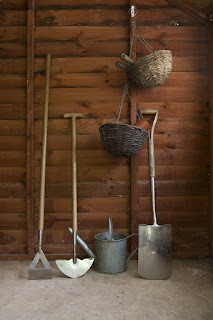
Tools for life lessons


A number of years ago - probably nearly 20 now - who can keep track? - a woman shared a bit of wisdom with me about life lessons. Always one to collect quotes or brief snippets that appealed to me, I kept it. It was:


RULES FOR BEING HUMAN
1. You will receive a body.  You may like it or hate it, but it will be yours for the entire period this time around.

2. You will learn lessons.  You are enrolled in a full-time informal school called life.  Each day in this school you will have the opportunity to learn lessons.  You may like the lessons or think them irrelevant and stupid.

3. There are no mistakes, only lessons.  Growth is a process of trial and error and experimentation.  The "failed" experiments are as much a part of the process as the experiment that ulti­mately "works.”

4. A lesson is repeated until learned.  A lesson will be present­ed to you in various forms until you have learned it.  When you have learned it, you can then go on to the next lesson.

5. Learning lessons does not end.  There is no part of life that does not contain its lessons.  If you are alive, there are lessons to be learned.

6. "There" is no better place than "here.”  When your "there" has become a "here,” you will simply obtain another "there" that will again, look better than "here.”

7. Others are merely mirrors of you.  You cannot love or hate something about another person unless it reflects to you some­thing you love or hate about yourself.

8. What you make of your life is up to you.  You have all the tools and resources you need.  What you do with them is up to you.  The choice is yours.

9. Your answers lie inside you.  The answers to life's questions lie inside you.  All you need to do is look, listen and trust.

10. You will forget all this.
Author unknown, found on a refrigerator in Toronto

The most memorable zinging words were, "you will forget all this." Thus the need to be open to "relearning" perhaps in new, deeper ways the basic lessons of life, of which, I've decided there are too many to count on both hands. 

And so my garden has become my latest and possibly most patient and determined teacher. Clearly I am in need of a refresher coure in life lessons I'd forgotten I forgot, or perhaps ones where I haven't received the passing grade that will let me move on to the next lesson. 

When I started my garden a few years back in just a few months I had studied:
  • patience
  • understanding when enough is enough
  • planning
  • collaboration
  • sharing
  • tenacity
  • peacefulness
  • satisfaction
  • curiosity
  • acceptance and 
  • adaptability. 
In no particular order these lessons popped into my consciousness like sprouts that push throught hte earth. One minute nothing is there, the next there is a fresh budding insight, to be nurtured and fed. Hopefully to develop into a fully formed healthy insight that can be appreciated and savored. 

I've learned patience in many ways, the obvious, waiting for seeds to sprout, the less obvious waiting for weather to accommodate my desire to plant NOW! Trying to move tender greenhouse started seedling outside because I'm ready risks losing all. Obvious enough yet when impatience is at its height, it can be almost painful the waiting, the "doing nothing" (As if waiting for the proper conditions weren't work) that is required of successful gardeners. Not satisfied with the growth in the greenhouse, when the calendar said Spring, I ignored the wisdom of experience gardeners and seed packet instructions and started to move things outside because I was ready to experience my perception of being a gardener. Needless to say the poor things suffered with cold snaps. Pricy oca, organic pepper starts and flowers (cosmos and chrysanthemums) all had their leaves bleached white with cold. They struggled because of me but managed to live, stunted perhaps but at least there. 

That was the first year. Since then I've following the lead of the weather rather than feeling like I need to bend it to my will. I've asked for and been given help and advise (gardeners are the original collaborative spirits I've decided) and I've not given up when various pests and blights have occurred, but tried to outwit them without using chemicals, getting more and more curious about how they occur and how to quell them. And I've accepted the inevitable when there have been failures, ripping out one thing and planting something else, adapting to the world as it is.

My garden has taught me in ways that people couldn't. A garden has no intention but to grow, unlike people who may have intentions that frustrate ours. Listening to the lessons that it teaches has been much easier (and more true) than listening to people who I could watch do just the opposite. 

There are more lessons in my garden. I've passed it's first round of tests and am moving on...